Lawn Care Equipment List: What You Actually Need to Start and Scale
Marcus Thorne
Field Authority Lead
Published
2026-04-12
Read Time
10 min read

You’re standing in a Home Depot aisle staring at a $400 residential mower, wondering if it’ll hold up. Or you’re at a dealer lot looking at a $15,000 ZTR thinking you need it before you have 20 clients. The equipment decision you make in month one will either set you up for three profitable seasons or drain your cash before you cut your 50th lawn. Most beginners get it wrong in the same direction — they underbuy gear that dies in six months or overbuy commercial-grade everything before revenue justifies it.
Your startup lawn care equipment list doesn’t need to be long. It needs to be right. A 21-inch commercial walk-behind, a string trimmer, a backpack blower, a truck, and an open trailer will service 15-25 residential clients. Total budget: $3,000-$7,000 if you buy smart. Below is the complete breakdown — what to buy at each stage, what it costs in 2026, and when to upgrade.
Some links in this article are affiliate links — we earn a commission if you purchase, at no extra cost to you.
The Buying Philosophy — Commercial Quality, Practical Scale
Here’s the rule that saves you thousands: buy commercial grade from day one, but buy the smallest commercially appropriate size for your current client count.
Residential equipment is designed for 2-4 hours of use per week. You’re going to run yours 30-40 hours. Deck corrosion, motor burnout, and belt failures start within 3-6 months of daily commercial use. That $400 residential mower becomes a $400 paperweight by August.
The smarter move is buying used commercial. A 4-year-old commercial mower with 500 hours on it will outperform and outlast a brand-new residential mower at the same price point. Where to find used commercial gear:
- Dealer trade-ins — most dealers take trade-ins on new purchases and sell them at fair prices
- Facebook Marketplace and Craigslist — search for “commercial mower” in your area weekly
- Local auction sites — liquidations from operators who exited the business
- LawnSite forums — the classifieds section moves quality used equipment
Buy new only when used commercial isn’t available in your size at a fair price. And never buy residential for commercial work. Period.
Mowers — The Most Important Decision
Your mower is your primary production tool. Get this right and everything else falls into place.
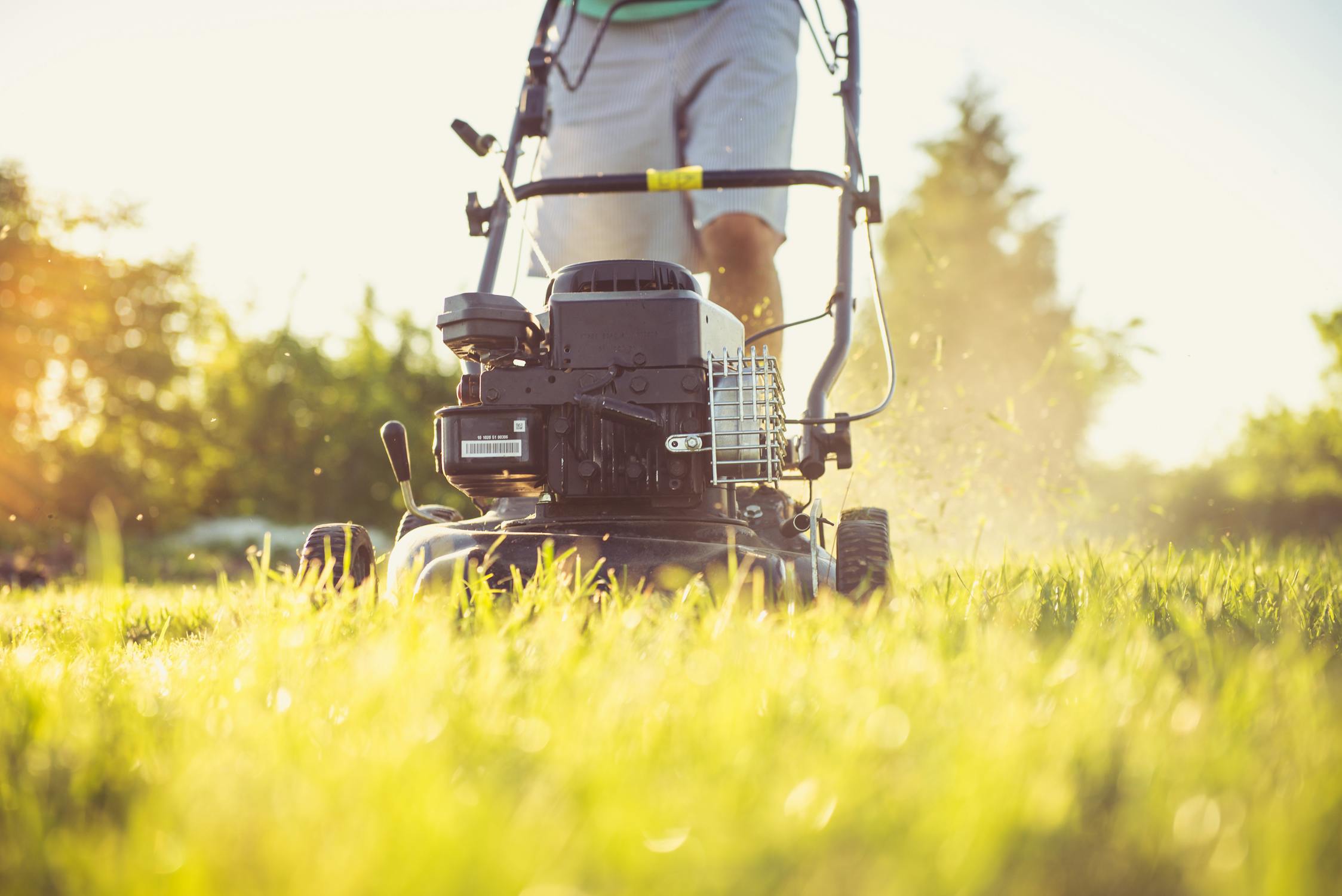
The Starter Mower: 21-Inch Commercial Walk-Behind
Best for mixed residential properties, fenced backyards, and tight spaces where a bigger deck can’t reach. If you’re servicing 15-25 residential clients, a commercial 21-inch is all you need.
What to buy:
- Honda HRC216HXA — the gold standard for commercial 21-inch mowing. Hydrostatic self-propel, shaft drive, blade brake clutch. Currently priced around $1,649 new from Honda dealers.
- Toro 22296 Heavy Duty — Honda GXV160 engine, commercial frame, BBC system. Runs $1,200-$1,500 depending on the dealer.
- Exmark Commercial 21 X-Series — same DNA as the Toro (same parent company), with Exmark’s cut quality. Similar price range.
Used pricing: $400-$800 for a well-maintained unit with documented hours.
Don’t let anyone tell you a 21-inch is “not a real commercial mower.” It’s the machine that builds your first $50K in revenue while you learn your routes, your clients, and your business. You can upgrade to a bigger deck after you’ve earned the revenue to justify it.
Field Pro Tip: Before buying any used mower, check the spindle bearings, pull the air filter, and look at the underside of the deck for weld repairs. A mower with a clean deck underside and fresh oil has been maintained. One with caked-on grass and a black air filter has been abused.
The Mid-Stage Upgrade: Commercial Walk-Behind or Stander
Once you’re running 20-50 clients, a 21-inch starts costing you time. A 36-48 inch commercial walk-behind or stander cuts your mowing time per property by 40-60%.
- 36-inch deck — fits through every standard gate, handles most residential lots
- 48-inch deck — the sweet spot for larger residential and small commercial
- Standers in the 36-48 inch range are the most versatile first upgrade for most operators — faster than a WB, smaller footprint than a ZTR
New pricing: $5,000-$9,000 depending on brand and deck size. Used: $2,500-$5,000 for a unit with reasonable hours.
Husqvarna’s commercial walk-behind lineup is one of the most common machines on residential routes across the country. Durable frame, widely available parts, and they hold a clean cut for 3+ seasons with proper blade maintenance and regular oil changes.
The Scaling Upgrade: Zero-Turn Mower (ZTR)
A ZTR makes sense when you’re doing 5+ large properties per week — lawns over 8,000 sq ft each. Before that, a stander or WB is faster on residential routes because of the transport and maneuverability advantage.
- 48-54 inch deck — most residential routes
- 60-72 inch deck — commercial properties, HOA common areas, sports fields
New pricing: $7,000-$15,000 depending on brand and size. Used: $4,000-$9,000 for low-to-mid hour units.
Don’t rush to buy a ZTR. It’s a $10K+ decision that only pays off when your property mix demands it. If 80% of your clients have fenced backyards under 5,000 sq ft, a stander is still your better investment.
Handheld Equipment — Don’t Cheap Out Here
Your handhelds complete the job. A bad mow with great trimming and blowing looks better than a great mow with sloppy edges.
String Trimmer / Line Trimmer
Required on day one. The mow, blow, and go isn’t complete without clean edging and trimming around beds, fences, and obstacles.
What to buy:
- STIHL FS 56 RC-E — reliable entry-level commercial trimmer, around $220-$250
- Echo SRM-225 — workhorse of the industry, approximately $230 at Home Depot
- Husqvarna 525L — solid mid-range commercial option, $280-$350
According to GreenPal’s industry survey, over 50% of lawn care professionals run Echo trimmers — largely because of the price-to-durability ratio and dealer availability.
Skip battery trimmers for commercial use. They don’t hold up to 8-hour days, and you’ll burn through battery packs faster than you’ll burn through trimmer line.
Backpack Blower
Required on day one. The blower is the last piece of equipment you touch before leaving a property — it’s what the client sees when they come home. Clean walks, clean driveway, clean beds.
What to buy:
- STIHL BR 600 — the most popular commercial backpack blower in the U.S., approximately $500-$550 from authorized dealers
- Husqvarna 580BTS — 75.6cc engine, 1,000 CFM, retails around $640 new
- Echo PB-9010T — the most powerful in the class at 1,110 CFM and 79.9cc, around $630 at Home Depot
The Husqvarna 580BTS is what a lot of commercial crews are running. The high-flow design cuts blower time by 15-20% on larger properties compared to mid-range units. If you’re buying one piece of equipment new, make it the blower.
Edger
Optional at startup. Your string trimmer can edge — flip it vertical and walk the sidewalk line. It’s not as clean as a dedicated stick edger, but it works for your first 25-30 clients.
Buy a dedicated edger ($150-$300) when edge quality becomes a differentiator for client retention — usually around 30+ properties when you’re competing for higher-end residential accounts.
Additional Handheld and Hand Tools
Round out your rig with these basics, most available on Amazon:
- Measuring wheel — for accurate property quoting ($30-$60)
- Hand tools — rakes, tarps, bags for cleanup work ($50-$100)
- Fuel cans — OSHA-compliant containers for gas and 2-stroke mix ($20-$40)
Truck and Trailer — Your Mobile Operation
Your rig is your office, your workshop, and your billboard. It doesn’t need to be pretty, but it needs to be reliable.
The Truck
Minimum: a half-ton pickup with a tow package. Full stop. Don’t start with a car, SUV, or minivan — you’ll outgrow it in 60 days and lose money reselling it.
The three standard starting points:
- Ford F-150 — the most popular work truck in the industry
- Chevy Silverado 1500 — the Work Truck trim starts at $38,995 MSRP new, per Kelley Blue Book
- Ram 1500 — solid alternative, good towing capacity
Used is the move. A 3-5 year old half-ton with 60,000-90,000 miles and a tow package will run $18,000-$28,000 — and it’ll tow your landscape trailer for years. Don’t finance a $50K truck before you have $50K in annual revenue.
For a deeper breakdown on choosing the right work vehicle, check out our guide to the best truck for a lawn care business.
The Trailer
Starter trailer: 6x12 open utility trailer with a ramp gate. Based on current dealer pricing, expect to pay $2,200-$3,200 new for a single-axle unit with a 2,990-3,500 lb GVWR. This handles one mower, your handhelds, and fuel cans.
Next upgrade: 7x16 or 16x18 tandem-axle landscape trailer when you add a second mower or a stander. Budget $3,500-$5,500.
Trailer accessories that matter:
- Trimmer racks — keep handhelds secure and organized (side-mount, $50-$150)
- Blower bracket — protect your blower from bouncing around
- Lockable toolbox — for small parts, spare blades, and personal gear
- DECKED truck bed storage — drawer system that keeps your truck bed organized and locks your tools in
- etrailer for hitches, wiring, and trailer accessories — they have the best fitment guides online
Safety and Supplies — Non-Negotiable
Safety gear isn’t optional. It’s cheap compared to an ER visit or a lawsuit.
- Eye protection — always. Flying debris from a trimmer at 8,000 RPM causes permanent eye injury. Wrap-around safety glasses, every time.
- Hearing protection — mandatory with gas equipment daily. Foam plugs or over-ear muffs. Your hearing doesn’t come back.
- Steel-toed boots — required for operating equipment around crew members. KEEN Utility boots are what a lot of operators wear — comfortable enough for 10-hour days, tough enough for commercial work. WorkingPerson.com carries a solid selection of work boots and safety gear at fair prices.
- First aid kit — in the truck, restocked monthly. Non-negotiable.
- Fuel management — OSHA-approved containers, no smoking near fuel, proper storage
Equipment Maintenance Supplies
Carry common spares so a breakdown doesn’t kill your route day:
- Extra mower blades (sharpen or swap every 8-10 hours of cutting)
- Air filters and spark plugs
- Belts for your primary mower
- Trimmer line and heads
- Basic tool kit — wrenches, socket set, screwdrivers
Run AMSOIL synthetic small engine oil — it handles the heat stress of commercial use better than conventional oil, and extended drain intervals save you time. For replacement parts, Jack’s Small Engines stocks OEM parts for virtually every commercial mower, trimmer, and blower on the market.
Field Pro Tip: Build a “parts kit” before your season starts — 2 spare blades, 2 air filters, 4 spark plugs, a belt for your mower, and 3 spools of trimmer line. Buying parts in bulk during the off-season saves 15-20% and prevents mid-route trips to the dealer.
What to Buy Next — The Scaling Equipment Sequence
Don’t jump ahead. Buy equipment when your revenue justifies it, not when your ego demands it. Here’s the sequence most successful operators follow:
Phase 1: Solo Startup (0-20 Clients)
| Equipment | Budget |
|---|---|
| 21-inch commercial mower (used) | $500-$800 |
| Commercial string trimmer | $220-$350 |
| Commercial backpack blower | $500-$650 |
| Used half-ton truck | $15,000-$25,000 |
| 6x12 open trailer | $2,200-$3,200 |
| Safety gear and hand tools | $200-$400 |
| Total | $3,600-$7,000 (excluding truck if you already own one) |
This rig handles 15-25 residential properties per week. Your focus at this stage is building route density and learning your business — not buying more equipment.
Phase 2: Growing Route (20-50 Clients)
Add a commercial walk-behind or stander in the 36-48 inch range. Budget $4,000-$8,000 new, or $2,500-$5,000 used. Keep your 21-inch for fenced backyards — it becomes your gate mower.
This is also when you should invest in lawn care software to manage scheduling, invoicing, and client communication. Pen and paper stops working around 25 clients.
Phase 3: Multi-Mower Operation (50-80 Clients)
Add a ZTR for your larger properties. Budget $8,000-$15,000. Buy a second set of handhelds for your second crew member or for a backup set. Upgrade to a larger trailer if needed.
At this stage, make sure your pricing accounts for equipment costs — depreciation, maintenance, and replacement cycles should all be baked into your per-cut rate.
Phase 4: Two Crews (80+ Clients)
Second full rig — truck, trailer, mower, and handhelds. Budget $20,000-$40,000 for the second crew’s setup. This is when you’re running a real business, not a solo operation. Your equipment decisions should be driven by your P&L, not by what looks cool on the trailer.
If you’re just getting started with your business overall, read our complete guide to starting a lawn care business — it covers licensing, insurance, pricing, and marketing alongside the equipment decisions covered here.
Summary and Actionable Checklist
The equipment list is straightforward. The discipline is buying what you need now — not what you’ll need in two years.
- Buy commercial grade from day one — used commercial beats new residential every time
- Start with the core four: 21-inch commercial mower, string trimmer, backpack blower, and a truck with an open trailer
- Budget $3,000-$7,000 for a lean startup rig (excluding the truck if you already own one)
- Order your replacement parts kit before the season starts — blades, belts, air filters, spark plugs, trimmer line
- Set an upgrade trigger based on revenue and client count, not on what other operators are buying
- Read our truck buying guide before purchasing your work vehicle
- Download the Equipment Buyer’s Checklist before visiting a dealer or browsing used listings
Download our free Equipment Buyer’s Checklist — a printable list of every piece of gear covered in this guide, with model recommendations, price ranges, and a “buy new vs. used” decision matrix for each item. Bring it to the dealer or keep it open while you browse Facebook Marketplace. [Get the checklist here.]
Related Guides

Best Truck for a Lawn Care Business: What to Buy and What to Avoid
Find the best truck for your lawn care business. Covers F-150, Silverado, Ram 1500, Tundra — plus setup tips for 2026 buyers.

How Much Does a Lawn Care Business Make? Real Numbers by Stage
Lawn care businesses make $40K-$300K+ depending on stage. See real income breakdowns for solo ops through multi-crew — with expenses and profit margins.
How to Start a Lawn Care Business in 2026: The Complete Playbook
Start a lawn care business in 2026 for under $5K. Covers LLC setup, insurance, equipment, first customers, pricing, and software — with real cost breakdowns.